




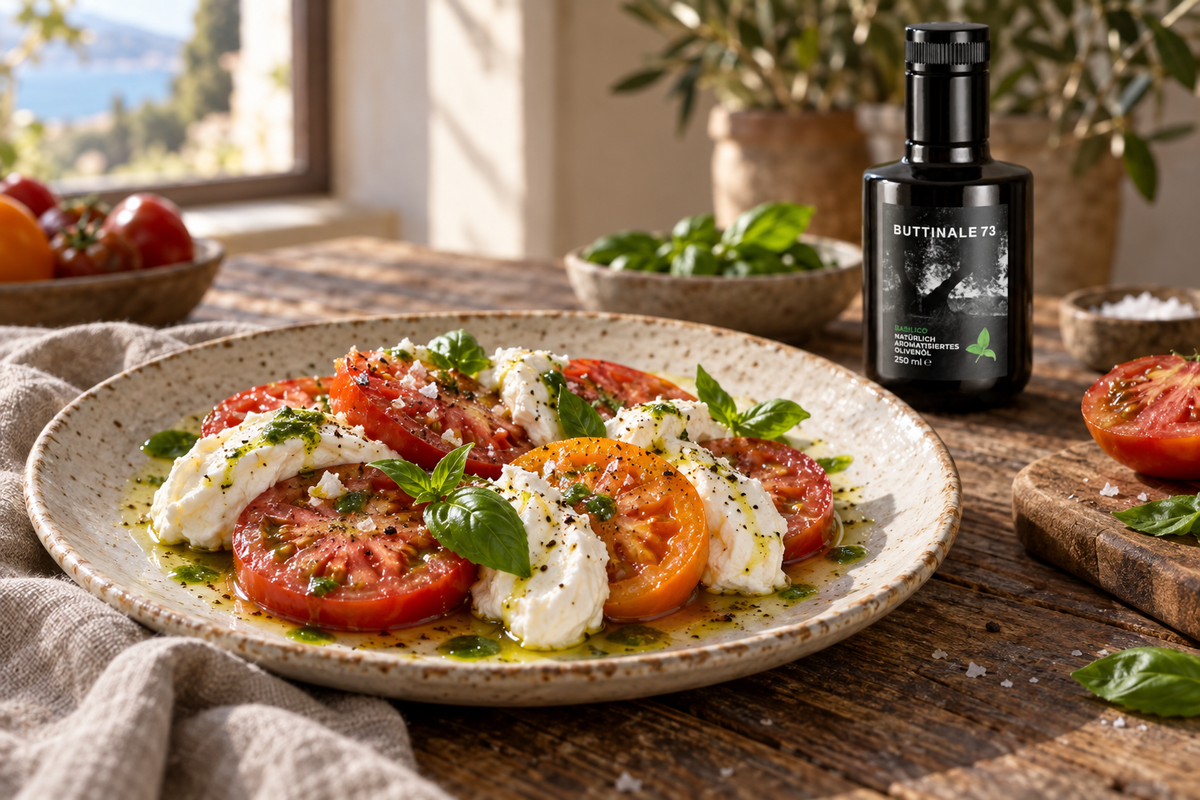
Caprese salad with basil oil: when tomatoes and mozzarella need more than salt
Caprese salad with basil oil: when tomatoes and mozzarella need more than salt
Caprese goes watery and bland when the tomatoes come straight from the fridge, go onto the plate unsalted and the mozzarella is still wet from its brine. The fix takes ten minutes: slice the tomatoes at room temperature, salt them well, leave them to sit and drain the mozzarella. Then a good extra virgin olive oil does the heavy lifting, and a few drops of basil oil go on right at the end.
Don’t throw away the juice that runs out of the tomatoes. Stir it into olive oil and you have the simplest caprese dressing there is, no balsamic glaze needed. Below you’ll find the oil quantities in tablespoons and two variations for the weeks when tomatoes are past their best: with peach or with roasted tomatoes.
Time: 25 mins · Serves: 4 as a starter · Difficulty: easy
By Babak Kharabi. Header image: created with AI.
Ingredients
- 600 g ripe tomatoes, ideally a mix (beef, oxheart, vine tomatoes)
- 1 level tsp fine sea salt (about 5 g) for the tomatoes
- 2 balls of mozzarella, buffalo or fior di latte (125 g drained weight each)
- 2 tbsp extra virgin olive oil, fruity with a gentle peppery finish
- ½ tbsp basil oil (flavoured olive oil)
- 1 pinch of sea salt flakes
- freshly ground black pepper
- optional: a few small basil leaves
Method
- Bring the tomatoes to room temperature. Take the tomatoes out of the fridge at least an hour ahead; better still, don’t keep them in the fridge at all. They should be at room temperature when you slice them.
- Slice and salt. Cut the tomatoes into slices about 1 cm thick, or into wedges if they’re small. Spread them out on a platter with a rim and sprinkle evenly with the fine sea salt. Leave for 10 minutes.
- Drain the mozzarella. Meanwhile, lift the mozzarella out of its brine and leave it on kitchen paper to drain, also for 10 minutes. Then tear it into bite-sized pieces rather than slicing it: the rough edges hold the dressing better.
- Make a dressing from the tomato juice. Carefully lift the tomatoes onto plates. Stir the juice left on the platter (usually 1 to 2 tbsp) into the 2 tbsp extra virgin olive oil.
- Assemble. Tuck the mozzarella in between the tomatoes. Spoon over the dressing and finish with pepper and a pinch of sea salt flakes.
- Basil oil last. Right before serving, dot the basil oil over the plates, about ½ tbsp in total. Add a few small basil leaves if you like. Serve straight away.
Why this stops caprese going watery
Salt draws water out of the tomato cells. The juice pooled on the platter after ten minutes would otherwise have ended up on the plate, diluting everything. The salt has also worked its way into the flesh instead of just sitting on the surface. Cold dulls flavour, which is why a tomato straight from the fridge tastes of very little. And mozzarella is packed in brine: if you don’t drain it, it ends up as a milky puddle.
Two oils, two jobs
The extra virgin olive oil goes in early. Stirred into the tomato juice, it turns into a light dressing that coats every slice. The basil oil goes on last, because its aroma doesn’t last. Stir it into the dressing and you’d lose it. A few drops also spread the basil flavour more evenly than a heap of leaves, which darken quickly once cut.
Variations for late summer and autumn
With peach
Swap half the tomatoes for two ripe peaches cut into wedges. Salt only the tomatoes in advance, not the peaches. Be generous with the pepper here, as it balances the sweetness.
With roasted tomatoes
For October, when tomatoes have almost no flavour left: halve 500 g cherry tomatoes, toss with 1 tbsp olive oil and a pinch of salt and roast at 150 °C (conventional oven) for about 60 minutes. Serve just warm with the mozzarella, with 1 tbsp extra virgin olive oil over the top and the basil oil at the end as before. Any leftover tomatoes are great on bruschetta the next day.
Which oil we use
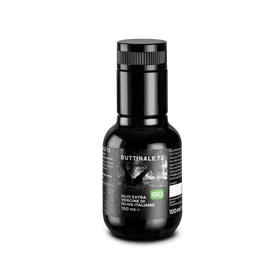
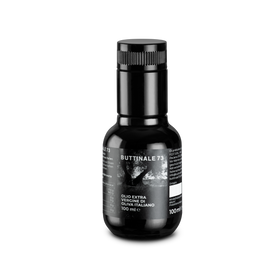
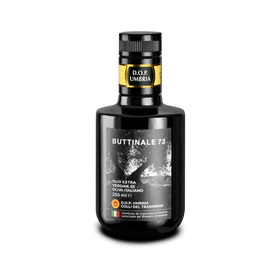
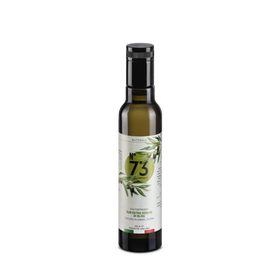
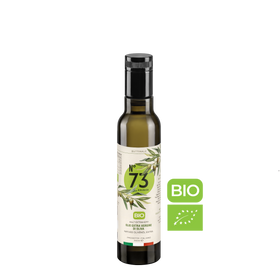
For the main flavour we use our BUTTINALE73 Manufaktur: grassy and fruity, with notes of almond and artichoke and a gentle peppery finish. The fruitiness suits the tomatoes, and the peppery kick gives the mild mozzarella a lift. If it catches briefly in your throat, that’s how it should be. We explain why in Why good olive oil catches in your throat.
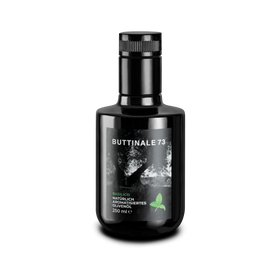
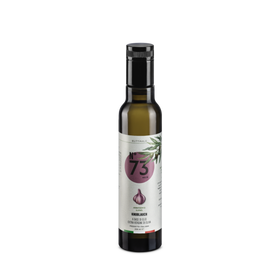
To finish we use BUTTINALE73 Manufaktur Basil, a flavoured olive oil from our Manufaktur range. We only ever use it cold and a few drops at a time, because the aroma does all the work here. Half a tablespoon is enough for four plates.
Common questions
Does balsamic vinegar belong on a caprese salad?
Not in the classic version. Tomato, mozzarella, salt, olive oil and basil are all you need. Sweet balsamic glaze tends to mask the tomato rather than bring it out. If you miss a little acidity, a few drops of a good aged vinegar are a better choice.
Buffalo mozzarella or cow’s milk mozzarella?
Both work. Mozzarella di bufala is creamier and richer, but it also releases more liquid, so draining it matters even more. Fior di latte, made from cow’s milk, is firmer and milder and a good choice when the tomatoes are full of flavour.
Can I make caprese ahead?
Partly. You can slice and salt the tomatoes and drain the mozzarella up to half an hour ahead. Don’t assemble it until just before serving, or the mozzarella goes soft in the tomato juice.
Which tomatoes work when they’re out of season?
Outside the summer months, halved cherry or baby plum tomatoes usually taste better than large salad tomatoes. Roasting them, as in the autumn variation, brings out even more flavour. A ripe tomato smells fragrant at the stalk end.
What do you serve with caprese?
Crusty white bread such as ciabatta is best, to mop up the tomato juice and oil. Caprese is a starter; if you want to follow it with a main course, grilled fish or chicken works well. This recipe serves 4 as a starter.
What does caprese mean?
Insalata caprese literally means ‘salad in the style of Capri’. The classic version is tomatoes, mozzarella and basil with olive oil and salt. That’s all it needs.
Why do you salt the tomatoes first for caprese?
Salt draws water out of the tomatoes, so the juice doesn’t end up diluting everything on the plate. After 10 minutes, lift off the slices and stir the juice into the olive oil to make the dressing. The salt also works its way into the flesh instead of just sitting on the surface.
You might also like
All recipes
Pumpkin soup with ginger: the ginger goes on top as a finishing oil
Creamy pumpkin soup made with red kuri (Hokkaido) squash in the style of the Italian vellutata di zucca, with no cream at all. The ginger isn’t cooked: it goes on raw at...
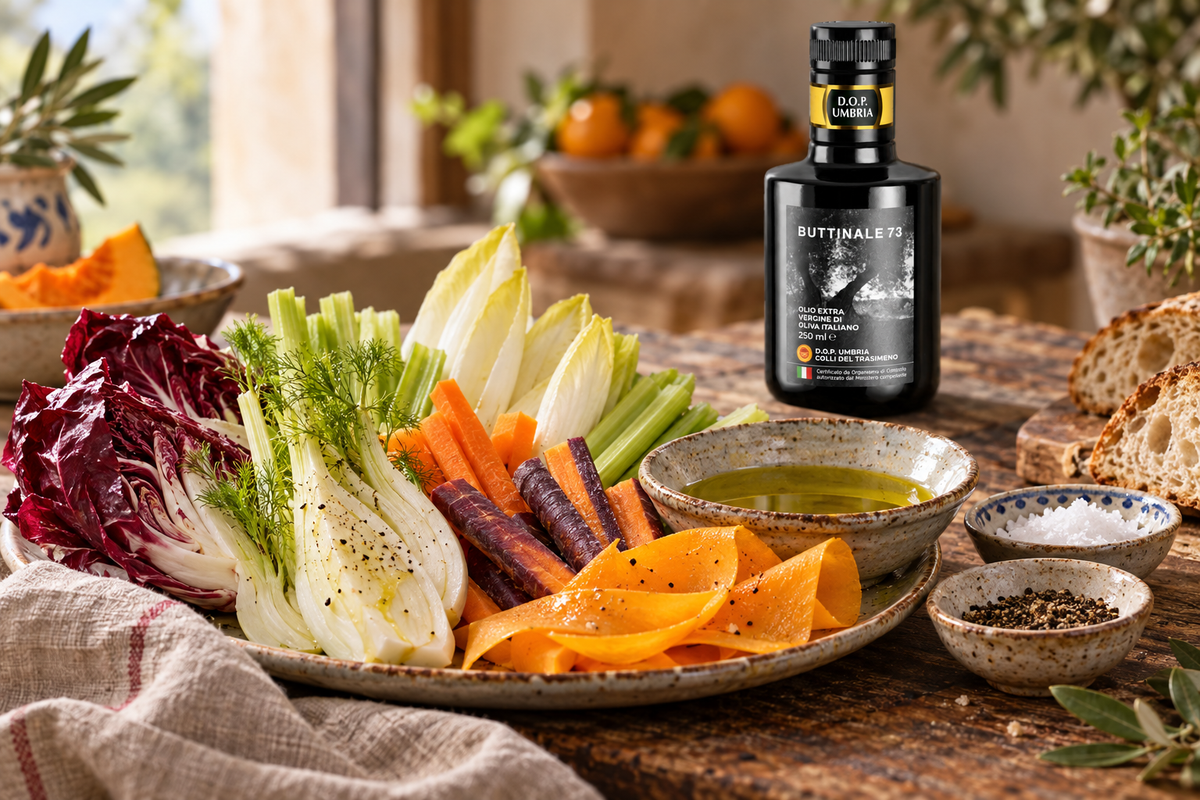
Pinzimonio: raw winter vegetables dipped in olive oil
Pinzimonio is a platter of raw vegetables, with a little bowl of olive oil, salt and pepper for everyone to dip into. This is the winter version, with radicchio, fennel, celery, carrots,...
Ribollita: Tuscan bread soup finished with olive oil
Ribollita is the Tuscan soup of white beans, cavolo nero, root vegetables and stale bread that rests overnight and is brought back to the boil the next day. Serves 4, with realistic...