



Why good olive oil catches in your throat
Why good olive oil catches in your throat
If an olive oil catches in your throat or tastes bitter, there’s nothing wrong with it. Pungency and bitterness, along with fruitiness, are the three positive attributes trained tasters look for in extra virgin olive oil. You only have a problem if the oil smells stale, fermented or musty before you’ve even tasted it.
By Babak Kharabi. Header image: created with AI.
Bitter and pungent are official marks of quality
The lab alone doesn’t decide whether an oil can be sold as extra virgin. A tasting does too, carried out by a panel of 8 to 12 trained tasters. They look for two things: defects and positive attributes. The EU marketing standard names exactly three positive attributes: fruity, bitter and pungent.
‘Pungent’ is the peppery catch you feel at the back of your throat, often a second or two after you swallow. ‘Bitter’ is a taste you notice mainly at the back of your tongue. Both are welcome, as long as they’re in balance with the fruit.
If the label describes the flavour, it has to follow a fixed scale: up to 3 is delicate, up to 6 medium, above 6 robust. These descriptions are only allowed on virgin oils. So ‘robust’ next to ‘pungent’ on a bottle is a description, not a warning.
What causes the peppery catch and the bitterness
Both come from phenolic compounds, often called polyphenols. They’re present in the olive and pass into the oil during extraction. As far as flavour goes, they’re the main source of bitterness and pungency.
The typical peppery catch is put down mainly to one compound, oleocanthal. It stimulates nerves found mostly in the throat and hardly at all in the mouth. That’s why olive oil doesn’t burn your tongue the way chilli does: you only feel it when you swallow. The bitterness comes mainly from the breakdown products of oleuropein, the bitter compound that makes raw olives inedible straight off the tree.
How peppery an oil is depends on several things:
- Ripeness: Olives picked early, while still green and fresh, usually give a more bitter, more pungent oil. Ripe olives tend to give rounder, milder oils.
- Variety: Some olive varieties are naturally robust, others gentle.
- Processing: How fresh the olives are when they reach the mill, and how much heat and air they’re exposed to, decide how much of these compounds ends up in the oil.
- Age: These compounds break down over time. An oil that’s very peppery just after the harvest can be noticeably tamer a few months later.
The peppery catch has nothing to do with acidity. Acidity measures free fatty acids and doesn’t taste sour. For extra virgin, the limit is 0.8 grams per 100 grams of oil, however pungent the oil is. We explain the quality grades in Extra virgin, virgin, cold pressed.
A peppery catch or a defect: how to tell the difference
The simplest rule: you feel the positive attributes in your mouth and throat, but you can usually smell a defect before you taste it. A good, robust oil smells fresh: of cut grass, green tomato, artichoke, almond or apple, for example. A faulty one smells of something you wouldn’t want in any other food either.
| Attribute | What it smells or tastes like | Where it comes from | Verdict |
|---|---|---|---|
| Pungent | A peppery, scratchy catch in the throat, often delayed, fading after a few seconds | Phenolic compounds, especially oleocanthal | Positive |
| Bitter | Bitter at the back of the tongue, like rocket, chicory or green almond | Phenolic compounds from the olive | Positive |
| Fruity | Fresh, green or ripe: grass, tomato, artichoke, apple | Sound olives, processed while fresh | Positive, required for extra virgin |
| Rancid | Stale nuts, crayons, putty, old frying fat, a stale film on the palate | Oxidation from light, air, heat or age | Defect |
| Fusty | Heavy and fermented, like fermented olives or silage | The olives sat too long before processing and began to ferment, or the oil was left too long on its sediment | Defect |
| Musty | Like a damp cellar, mould or mushrooms | The olives were stored damp and went mouldy | Defect |
| Winey, vinegary | Sharp and sour, like wine or vinegar | The olives fermented | Defect |
For extra virgin olive oil, the panel’s median of defects must be 0. If the tasters find a defect, the oil can’t be called extra virgin. Plain virgin olive oil may have slight defects, up to a median of 3.5.
One thing to watch: rancid oil can burn your throat too. But the smell gives it away. A good peppery catch comes with fresh fruit; a rancid one comes with old fat.
How to taste it yourself
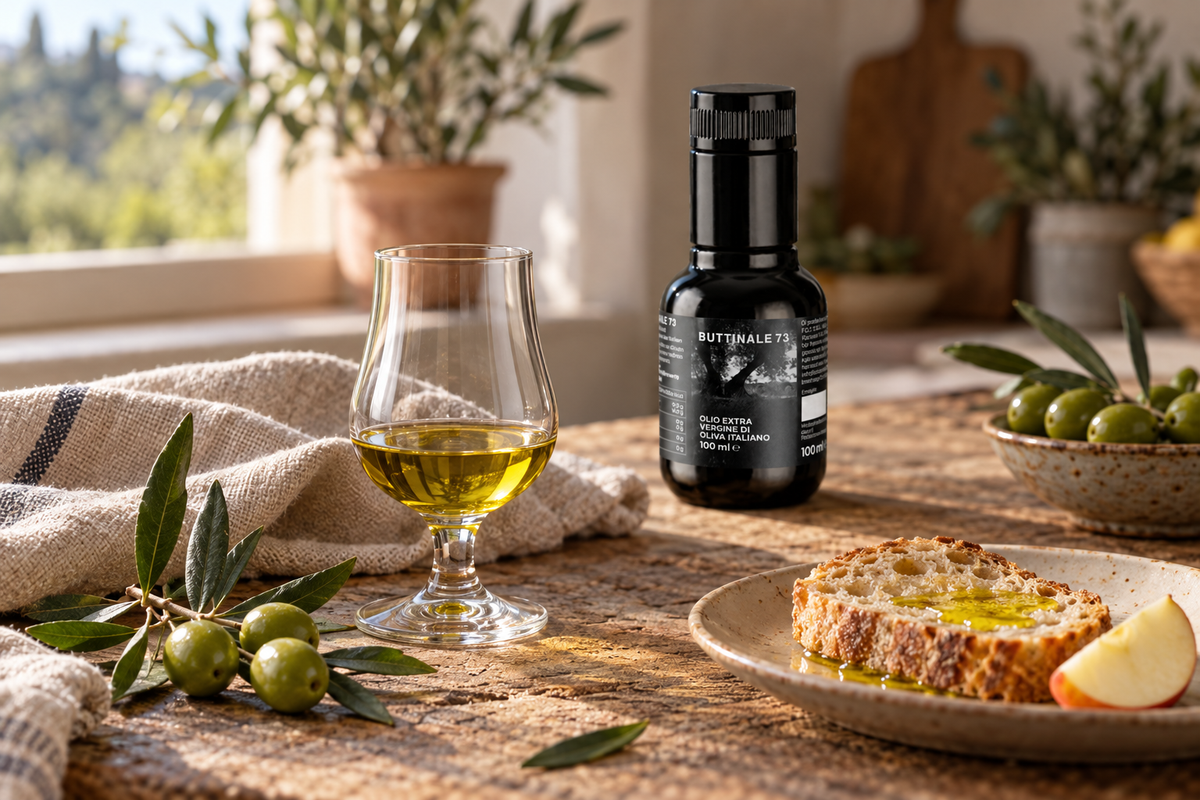
- Pour about a tablespoon of oil into a small glass. Cover it with your hand and warm it for a moment.
- Smell it. Green or ripe and fruity is good. Nuts, wax, cellar or vinegar are warning signs.
- Take a small sip and draw in a little air through slightly parted lips, so the oil coats your whole mouth.
- Swallow and wait. Bitterness comes straight away, the peppery catch usually a second or two later.
- Cleanse your palate between oils with a slice of apple or a sip of water.
Ignore the colour. Professional tasters use blue glasses so it can’t sway them.
Oil not peppery? That doesn’t make it bad
An oil that doesn’t catch in your throat isn’t a bad oil. At the tasting, the EU asks only two things of extra virgin: the oil must be fruity and free of defects. Bitter and pungent can score zero. Extra virgin is a minimum standard, not a score for intensity.
So mild isn’t a fault. Flat is. If an oil smells of nothing at all, neither green nor ripe, and just tastes greasy, it’s either old or not virgin. The most neutral category is ‘olive oil composed of refined olive oils and virgin olive oils’: refining strips out most of the flavour compounds.
If you don’t like the peppery catch, look for ‘delicate fruitiness’ or a low score for bitter and pungent on virgin oils. Buy a small bottle to try first.
If your oil used to be peppery and isn’t any more, it has aged. Olive oil doesn’t improve with time. Keep it somewhere cool and dark, tightly sealed and away from the hob, and use it up quickly.
Robust or mild: what goes with what
- Robust, bitter and pungent: bean and vegetable soups, grilled meat and vegetables, ripe tomatoes and robust bread, as in bruschetta. Salt, acidity and tomato soften the bitterness.
- Mild, with delicate fruitiness: fish, seafood, mashed potato, delicate salad leaves, baking.
- Mayonnaise: Robust oils can turn bitter in a blender. Use a mild oil or whisk by hand.
And our oils?
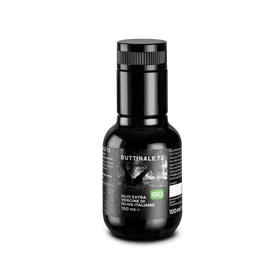
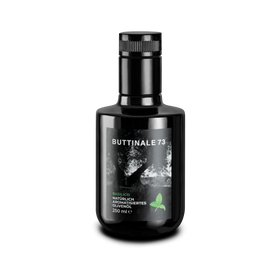
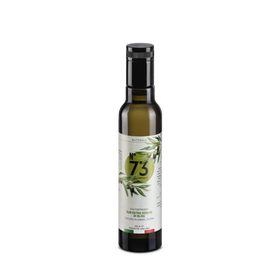
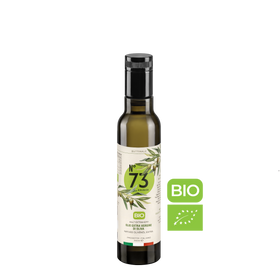
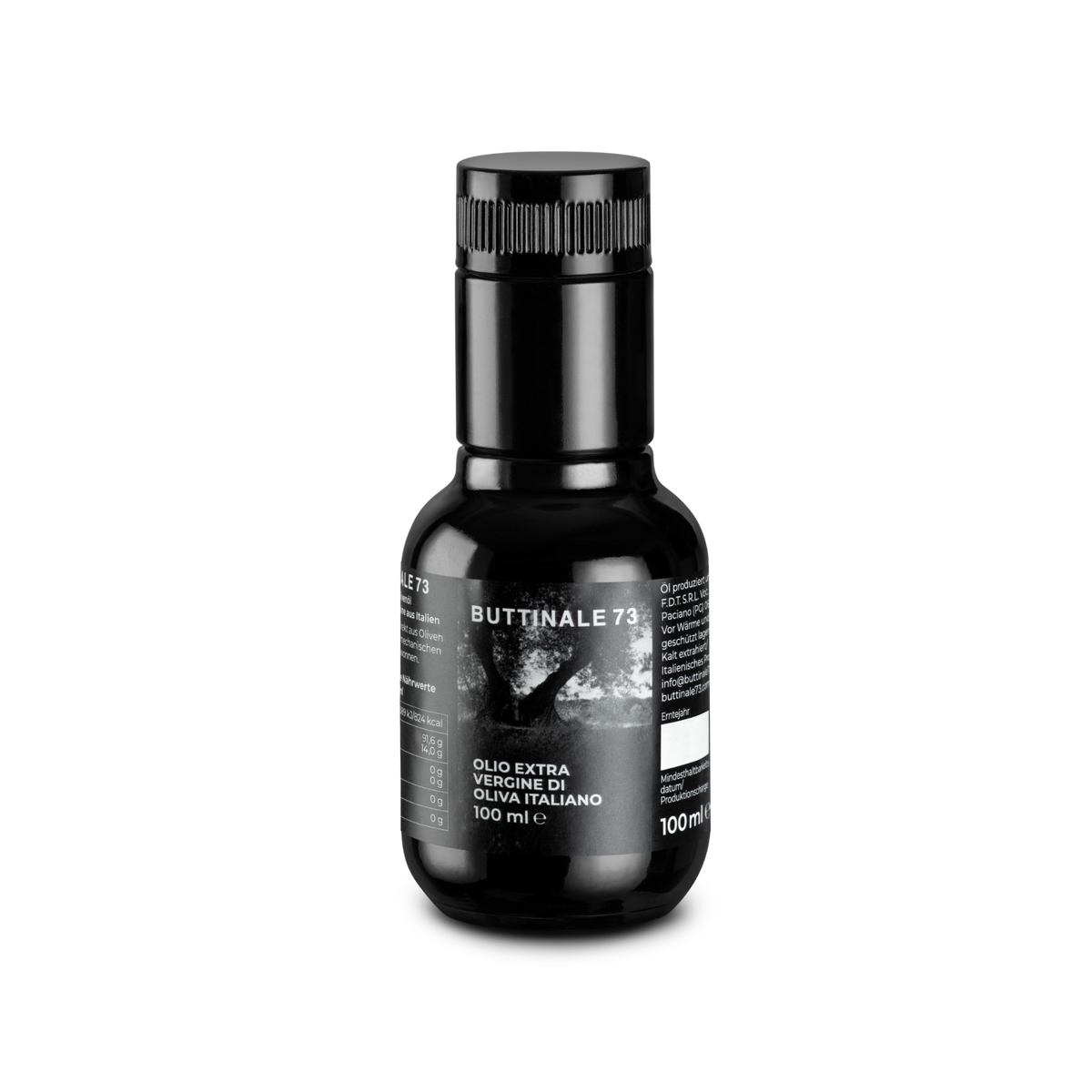
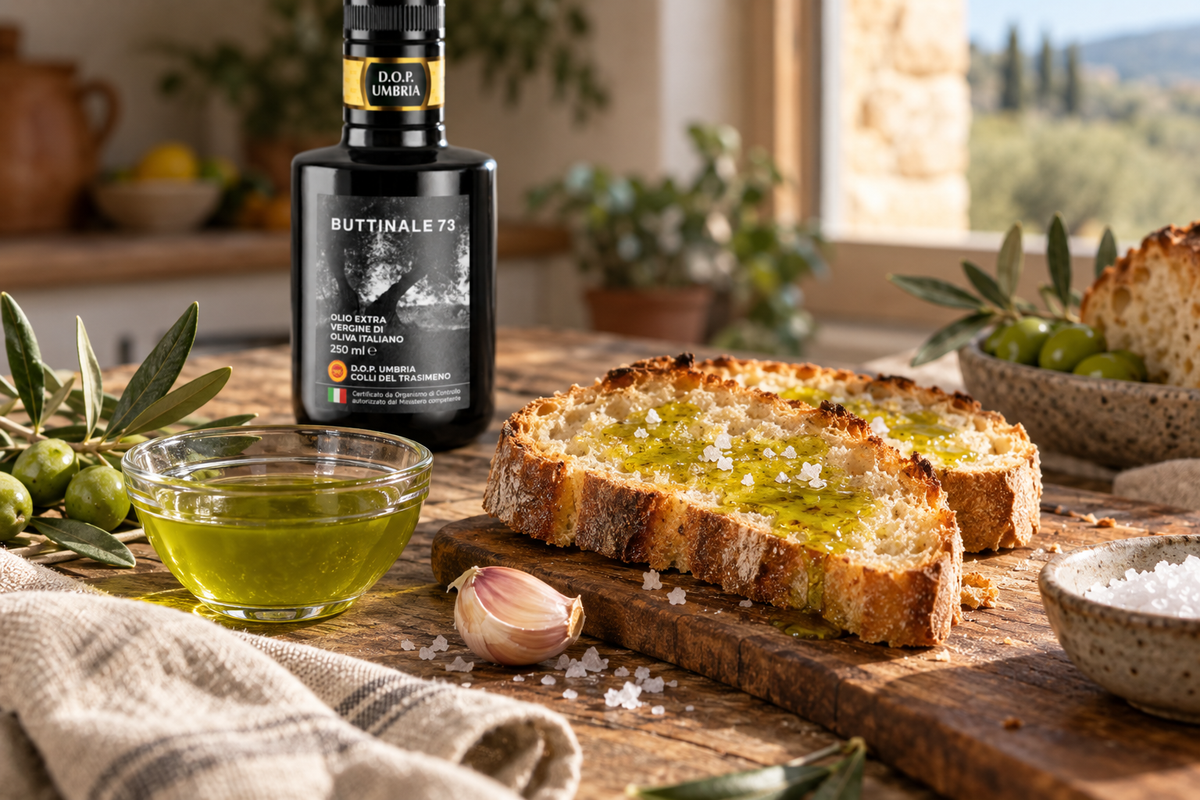
Our BUTTINALE73 Manufaktur is grassy and fruity, with notes of almond and artichoke and a gentle peppery finish. It’s carefully harvested, pressed on the day of harvest at our own olive mill in Paciano, Umbria, and kept below 27 °C throughout. Dark glass, bottling under nitrogen and our closure keep light and air out as far as possible, so it stays fresh for noticeably longer once opened. The best way to find out how bitter and pungent it tastes to you is with a spoon, exactly as described above.
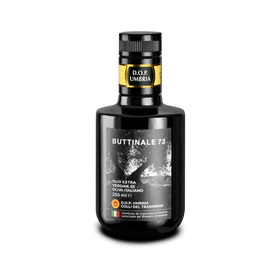
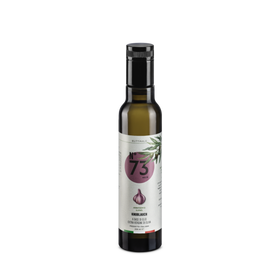
Curious how an oil from one precisely defined area tastes? BUTTINALE73 Manufaktur D.O.P. carries the protected designation of origin ‘D.O.P. Umbria Colli del Trasimeno’ and is carefully harvested too. With a D.O.P. (the Italian equivalent of PDO, Protected Designation of Origin), production, processing and preparation all take place within the defined area.
Common questions
Is bitter olive oil bad?
No. In extra virgin olive oil, bitterness is officially a positive attribute. If it’s too strong for you, use the oil in dishes with salt, acidity or tomato, which soften the bitterness. It’s only a concern if the oil also smells off, of stale nuts or a damp cellar, say.
Why doesn’t my olive oil taste peppery?
Usually because the olives were harvested ripe, the variety is naturally mild or the oil is simply getting old, as pungency fades over time. Check the label: if it just says ‘olive oil’ rather than extra virgin, refining has stripped out most of the flavour compounds. A mild extra virgin olive oil is still fine, as long as it smells fresh and fruity.
Why does some olive oil make me cough?
The pungency stimulates nerves in your throat, and your body responds with a brief urge to cough. It happens to trained tasters with robust oils too, and it’s no sign of a bad oil. Just take a smaller sip when tasting.
Can olive oil be too bitter?
Officially, bitterness is never a defect, but an oil can taste unbalanced if the bitterness drowns out the fruit. That’s a matter of taste. Oils like that suit robust dishes such as bean soup or grilled vegetables; raw on delicate fish, they’re usually too much.
Does rancid olive oil also catch in your throat?
Yes, rancid oil can leave an unpleasant burn in your throat too. The smell tells you which is which: rancid oil smells of stale nuts, crayons or old frying fat and leaves a stale, greasy film. A good peppery catch, by contrast, smells fresh and fades after a few seconds.
Read more
Guides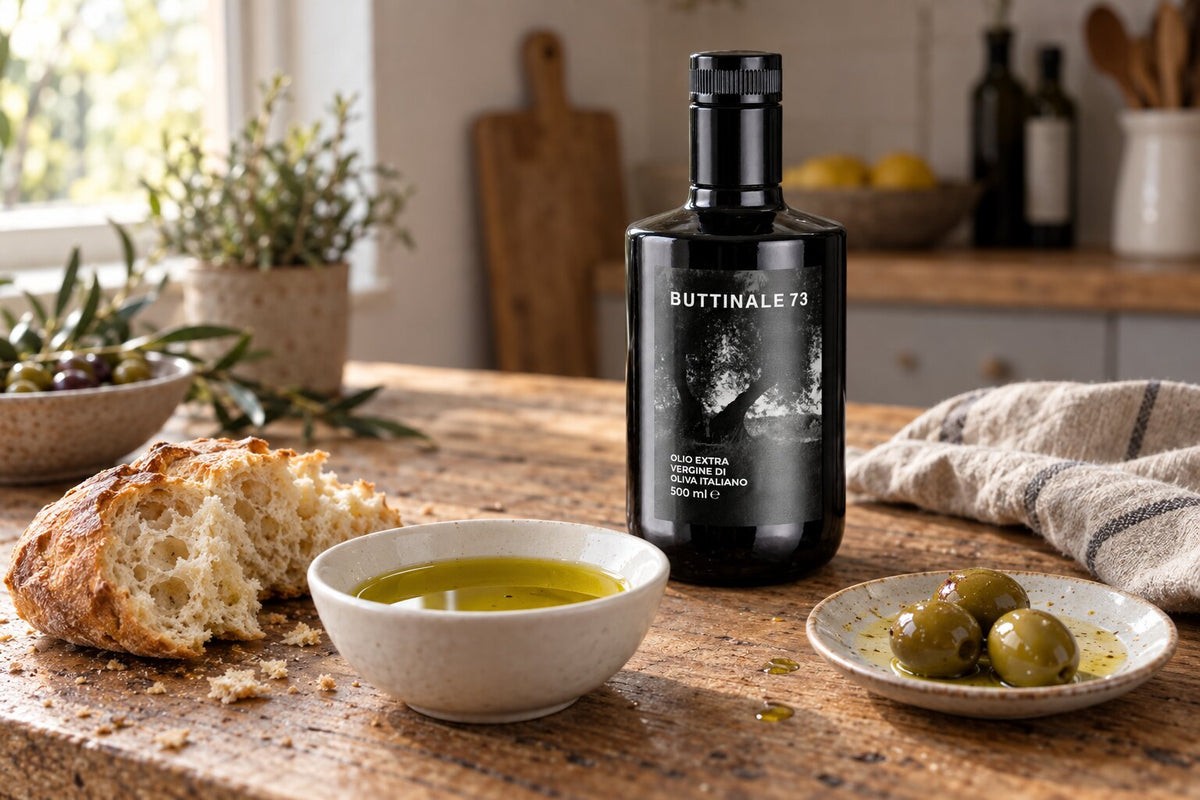
Extra virgin, virgin, cold pressed: what the olive oil labels really mean
Extra virgin is the top EU grade for olive oil; cold pressed isn’t a grade at all. Here’s what the terms on the label mean, with all the limits.
Olio nuovo: what makes new-season olive oil different
Olio nuovo is the first oil of the season, bottled straight after pressing, often unfiltered, green and peppery. Find out when it’s available, why you should use it up quickly and how...