



Extra virgin, virgin, cold-pressed: what the terms really mean
Extra virgin, virgin, cold-pressed: what the terms really mean
"Extra virgin" is the highest quality grade the EU sets for olive oil: at most 0.8 percent free fatty acids and not a single flaw in the sensory test. "Virgin" without "extra" is the grade below, with up to 2 percent acidity and slight flaws. "Cold-pressed" is not a quality grade at all, but a voluntary statement about the temperature during extraction.
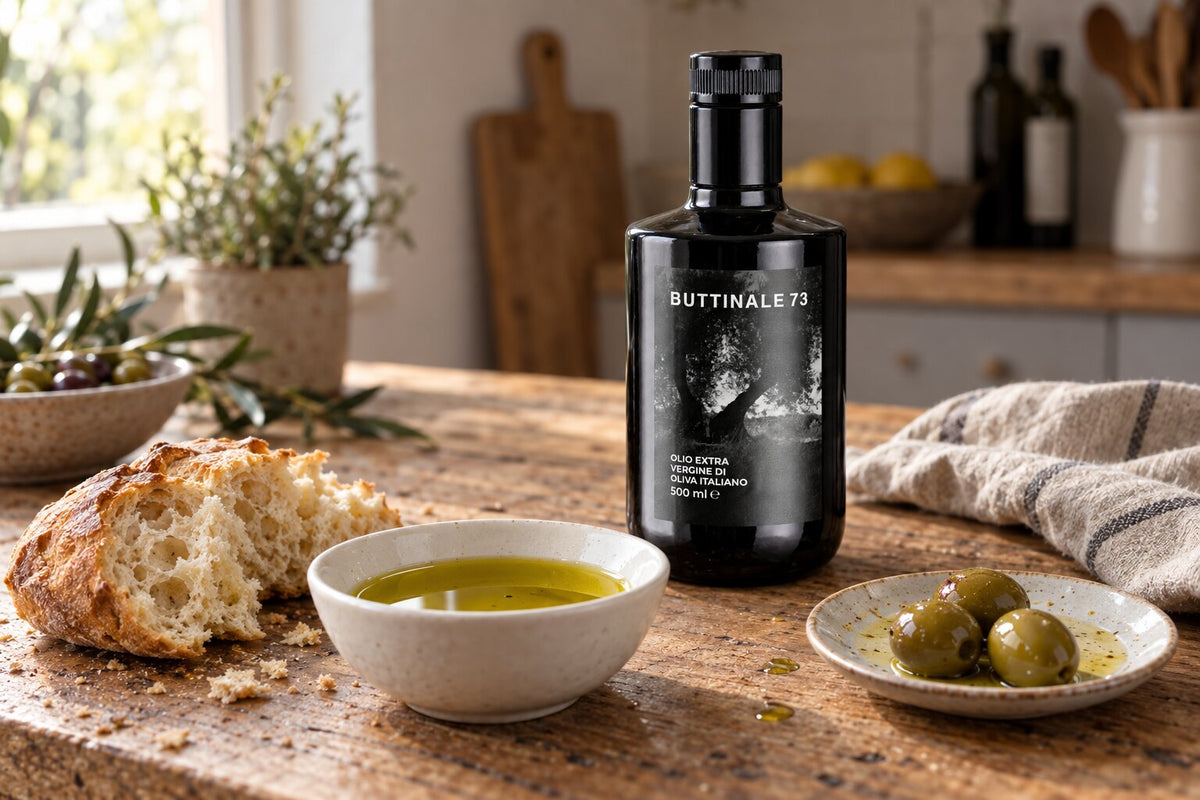
By Babak Kharabi. Cover image: created with AI.
The terms at a glance
| On the label | What it is | What is behind it |
|---|---|---|
|
Extra virgin olive oil extra vergine, extra virgin |
Grade 1 | At most 0.8 % free fatty acids. Sensory test without flaws, fruitiness detectable. |
|
Virgin olive oil vergine |
Grade 2 | At most 2.0 % free fatty acids. Slight flavour flaws are allowed. |
|
Olive oil without further additions |
Blend | Refined olive oil, blended with virgin oil. At most 1.0 % free fatty acids. |
|
Cold extraction or "first cold pressing" |
Voluntary statement | The temperature during extraction was below 27 °C. Only allowed for virgin oils. |
Extra virgin: the grade in which there must be no flaw
An oil has to pass two tests to be called "extra virgin". The first takes place in the lab, the second on the palate.
In the lab, what matters above all is the content of free fatty acids, at most 0.8 grams per 100 grams of oil. This value has nothing to do with a sour taste. It shows how intact the olives were: damaged, overripe or too long stored fruit pushes it up.
The second test is carried out by a trained panel of 8 to 12 tasters. They look for flaws such as rancid, fusty or musty. If the panel finds a single one, the oil is no longer "extra virgin", no matter how good the lab value is. In addition, it must be detectably fruity.
Bitter and pungent are not flaws here. Together with fruity, they are the three positive attributes that assessors rate.
Virgin without "extra": hard to find on the shelf
Virgin olive oil may have up to 2 percent free fatty acids and show slight flavour flaws. Like extra virgin, it is obtained purely mechanically, without chemistry and without refining.
In German shops you rarely see it. Almost every bottle carries the highest grade, from the discounter to the Manufaktur. That is where the sentence comes from that you read in every forum: "It's all basically the same."
The sentence is half right. The grade is the same, the oil is not. Extra virgin is a minimum requirement, not a mark. It says that an oil is free of flaws. How fresh, how aromatic and how carefully made it is, it does not say.
"Olive oil" without additions: refined and blended
If the label says only "olive oil", you are holding a blend. The main part is refined oil, that is, oil that could not be sold as virgin because of flaws and was technically cleaned. In the process the flaws disappear, but so do flavour and colour. A share of virgin oil is added back afterwards.
The result tastes neutral. For cold dishes where you want to taste the oil, it is the wrong choice.
Cold-pressed: the term almost everyone uses wrongly
In everyday speech, "cold-pressed" means roughly "high quality". Legally, it is a temperature statement with two variants, and both are tied to 27 °C:
- First cold pressing may only be stated if the oil was obtained with a classic hydraulic press.
- Cold extraction applies to oil obtained by centrifuge. That is how most mills work today.
Pressing in the literal sense is therefore rarely done any more. Anyone who says "cold-pressed" today almost always means cold extraction.
Why temperature matters: the warmer the olive paste, the more oil is released, and the more aroma is lost. A mill that works cold gives up yield. In our Manufaktur line, the olives are processed on the day of harvest, at 20 to 24 degrees.
In short: Extra virgin describes what is in the oil. Cold extraction describes how it was obtained. An oil can be both, and a good one usually is.
Extra vergine, EVOO, extra virgin
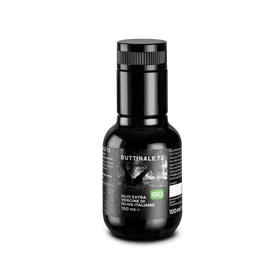
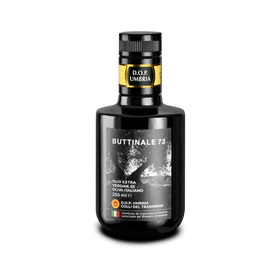
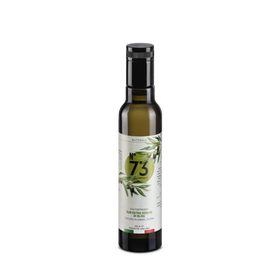
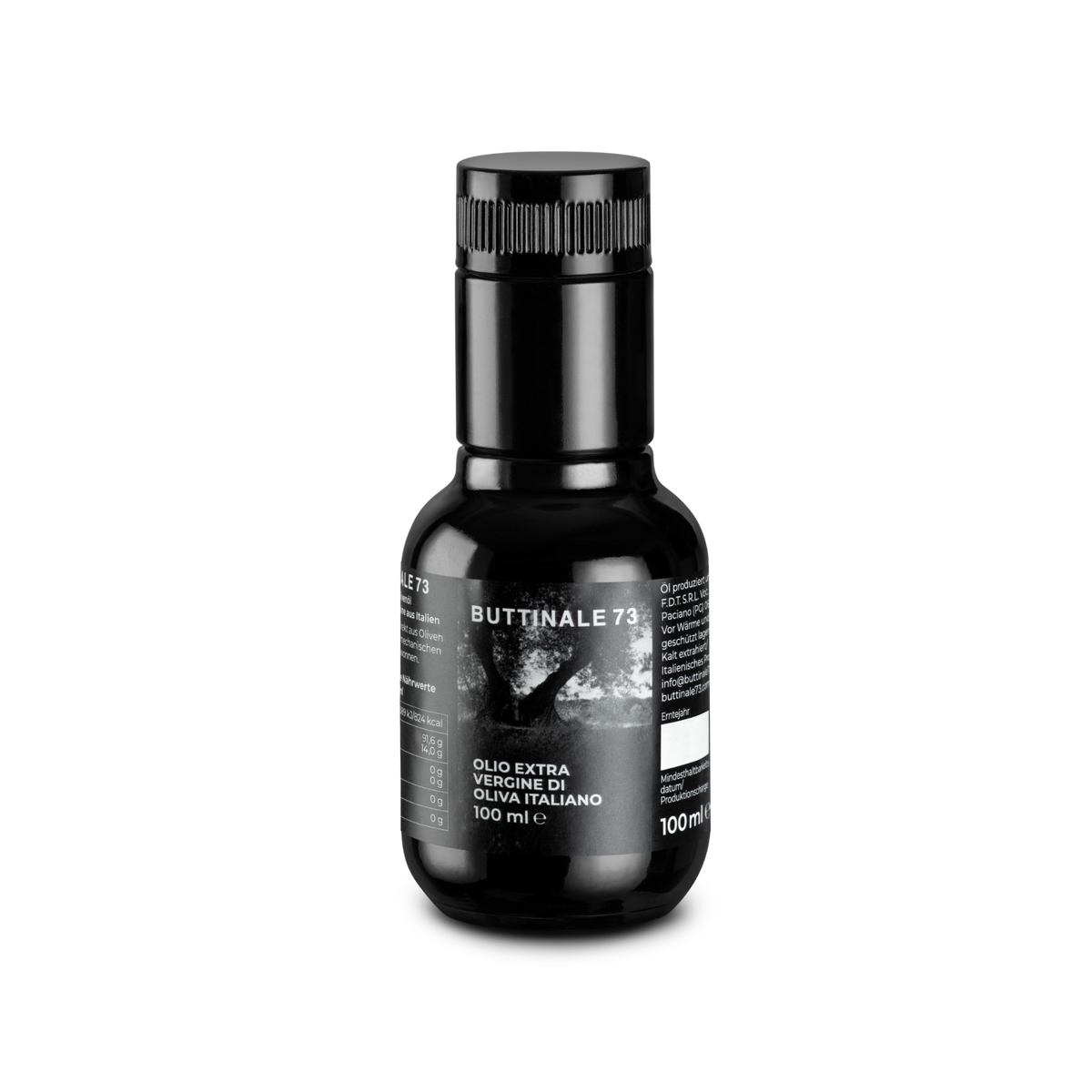
All three mean the same as "extra virgin". Extra vergine is Italian, extra virgin is English, EVOO is the abbreviation for it. Our Manufaktur bottle says "Olio Extra Vergine di Oliva Italiano", that is, extra virgin olive oil from Italy.
And oils with lemon or garlic?
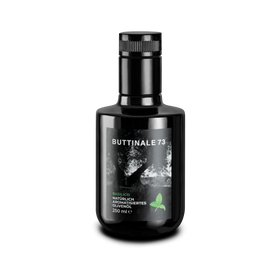
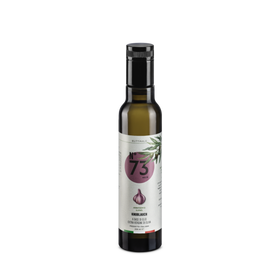
A flavoured oil must not be called "extra virgin olive oil", even if the base oil has that grade. Our flavoured oils therefore say "flavoured olive oil". That is not a downgrade, it is the correct designation.
What you can go by on the shelf
Because almost every bottle says "extra virgin", the word alone does not get you far. These details say more:
- Origin: A single country is more precise than "blend of olive oils from the European Union".
- Bottle: Dark glass protects against light, clear glass does not.
- Taste: Fruity, a little bitter, a little pungent is a good sign. Flat or musty is not.
Frequently asked questions
Is cold-pressed better than extra virgin?
They are two different things. Extra virgin is a quality grade with limit values and a sensory test. Cold-pressed only says that the temperature during extraction was below 27 degrees. An oil can be both.
Is extra vergine the same as extra virgin?
Yes. Extra vergine is the Italian term for the same EU quality grade, which is called extra virgin in English.
Why does almost every bottle say extra virgin?
Because the grade is a minimum requirement. Any oil that has at most 0.8 percent free fatty acids and is free of flaws in the sensory test may carry it. How good an oil is beyond that, the grade does not say.
Can you taste the acidity?
No. Free fatty acids are a lab value and have nothing to do with a sour taste. A scratch in the throat does not come from acidity, assessors rate it as the positive attribute "pungent".
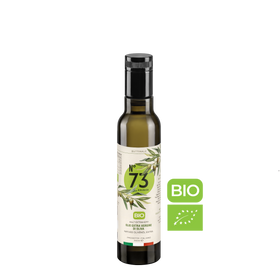
Our extra virgin olive oil from hand harvest: BUTTINALE73 Manufaktur.